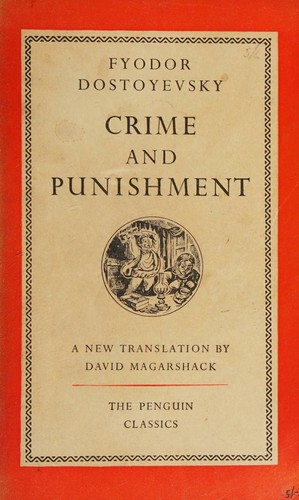
Crime and Punishment
Fyodor Dostoevsky · 1866
A poor student in St Petersburg convinces himself that extraordinary men are not bound by ordinary morality, murders a pawnbroker to prove it, and then spends four hundred pages discovering that his own mind will not let him get away with it. Almost none of the book is about the crime. It is about what happens in a person afterwards.
Dostoevsky wrote it in serial instalments while badly in debt, and the pressure shows in the best way — the pace is closer to a thriller than to a nineteenth-century novel. The long interrogation scenes with Porfiry, where nothing is ever quite said outright, are some of the most quietly frightening writing in fiction.
Its idea outlived it. The "extraordinary man" theory Raskolnikov talks himself into is one of those arguments that keeps resurfacing, usually in the mouths of people who have not noticed how badly it works out for him.